
Heather McPherson terms Jacques-Louis David’s ‘Death of Marat’ (see Figure-1) a work of historical fiction; something of a hybrid between portraiture and historical paintings . In the eighteenth century, portraiture was viewed as less prestigious than history paintings, being based on ‘imitation rather than invention’ . We can see that many elements of ‘Death of Marat’, like a historical painting, are ‘invented’, they do not accurately reflect the reality of Jean-Paul Marat’s assassination. Commissioned the day after the assassination of the French revolutionary journalist and politician , ‘Death of Marat’ is essentially a piece of propaganda to serve an ideological purpose. The assassination occurred at a time of political and social upheaval , with the campaign of political violence under the Montengard faction resulting in civil unrest and weakening the revolutionary movement . The painting can be viewed as the Montengard’s response to Marat’s assassination and was part of greater campaign to create revolutionary martyrs.
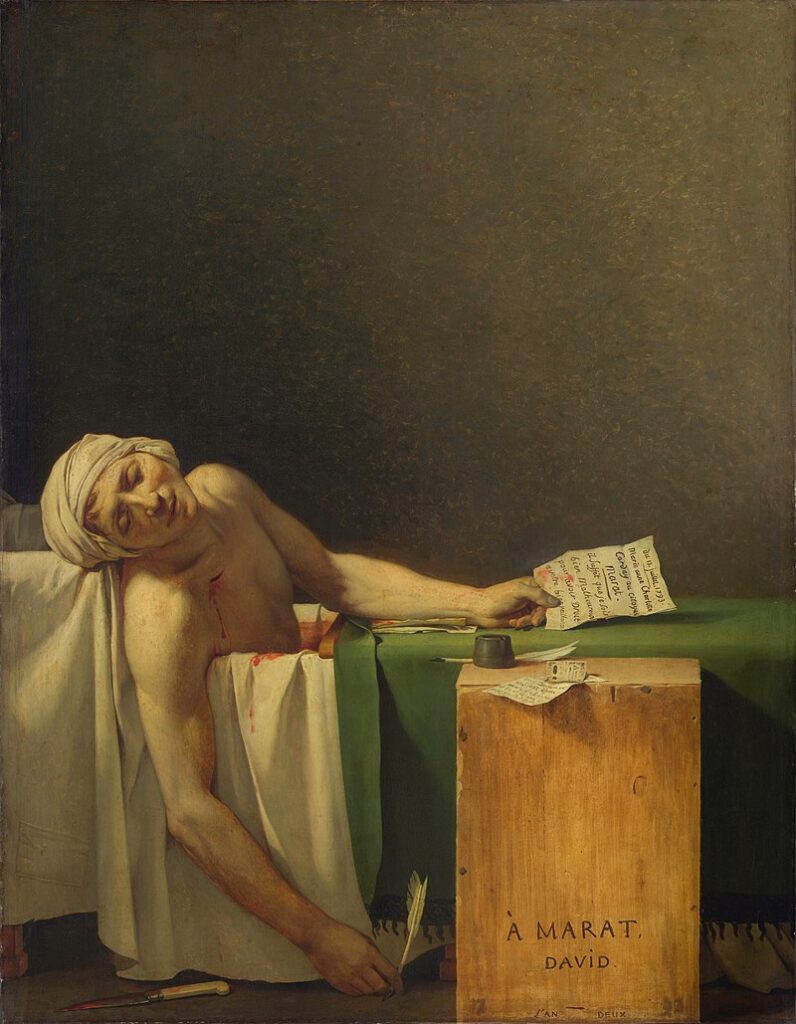
Fig 1 – By Jacques-Louis David – Google Art & Culture: upload by user FDRMRZUSA. Web Gallery of Art, Public Domain, https://commons.wikimedia.org/w/index.php?curid=112018
Although, for all intents and purposes, the painting can be viewed as inherently political, it is still effective in evoking strong emotions in an audience not familiar with the context. Therefore, it is important to examine the technical choices David utilises to create such a powerful image. The painting can be split into two halves, the lower half being the subject, the bathtub, wood block and the scattered papers and the upper half being the dark background . David uses the background to counterbalance the lower half of the painting and to help to focalize the subject. The darkness from the left illuminates the subject’s face and arms and the brighter area in the right-hand corner balances the wood block to create a sense of symmetry. David also contrasts the straight lines of the box and the bathtub with the subject’s body , heightening the sense of ‘collapse’ . David restricts his colour palette, predominantly using dull browns and yellows, to give the image a muted tone and allow for feelings of authenticity. The white sheets are brilliant in comparison and help to highlight the small touches of red blood to the audience. The fact that the image is not particularly gruesome prevents the audience from objectifying the subject, creating feelings of sympathy rather than revulsion. The bleak background furthers this idea. Without any distracting elements to divert the audience’s attention, they can maintain a greater connection to the subject. Incidentally the details that are included are not merely decoration , instead we can see many features in the painting that serve a specific purpose in relaying an idealized image of Marat.
Some of the painting’s details are so vivid that many critics of the painting viewed the image as an authentic account of what transpired ; Baudelaire described the painting as being as real as a Balzac novel . For example, the fact that the wooden crate is so intricate might suggest its authenticity to the audience. The painting portrayed a contemporary event, it therefore seems natural to assume that the scene depicted is accurate to the events that occurred. We can see, however, that many elements in the painting were staged to portray a sympathetic image of Marat . Despite being a famous advocate for the new social order, Marat was immensely disliked by his political contemporaries and held responsible for promoting brutal campaigns . David takes artistic liberties to show Marat be an ‘exemplum virtutis’ . For example, one difference between the painting and the reality is Marat’s implied poverty. The bathroom itself was wallpapered and furnished, not stark and austere as portrayed in the painting . The surroundings could imply to the audience that Marat led a humble existence, creating admiration around his character and perhaps evoking ideas of the Christian martyrs . Another key alteration made by David is Marat’s physical appearance. Marat’s debilitating skin condition, which required him to bathe each day, was deliberately painted out of the image . Instead Marat is portrayed as beautiful and serene, garnering feelings of reverence and sympathy from the audience. However, David obscured Marat’s features somewhat by having his face be tilted . This prevents the audience from properly observing Marat’s face, thus avoiding criticisms that the painting is an obvious idealisation and allowing the painting to feel more authentic .
Symbolism is also key in helping to portray a virtuous Marat. The inclusion of the quill and inkwell establish the idea of Marat’s nobility . They convey Marat’s dedication to his cause and suggests that he worked tirelessly, up to his dying moments, to better the lives of the French people . Likewise, the assignat to be given to ‘a mother of five whose husband died for his country’ is used to represent Marat’s generosity. In the article ‘The Corsets assignat in David’s Death of Marat’ , Spieth examines the assignat, a form of ‘Revolutionary fiat money’ , and expresses that David ‘took pains’ , to paint the assignat with detail , revealing its importance to the image. Spieth suggests the fact that the Corset assignat was used rather than a ‘letters promising an annuity’ for example, a method that would have resolved the widow’s financial predicament, conveys that Marat’s ‘kindness’ was not a mere political act. The money would have come ‘directly from his own pocket’ , creating the impression that Marat was a selfless individual and a true ‘l’ami du peuple’ (friend of the people). The fact that the inclusion of the assignat is not relevant to the event being depicted reinforces the painting’s primary function as political propaganda .
David also attempts to defame Marat’s assassin: Charlotte Corday . The most significant means of doing so is David’s choice not to include Corday in the painting . Choosing to solely focus on Marat, rather than the entire scene of the murder, detracts from Corday’s role in the assassination and her motivations to do so . Another detail David included to reduce Corday’s importance, is the knife. The actual knife used by Corday to murder Marat was not depicted in the painting, a kitchen knife is portrayed instead, ‘demoting Corday from a professional killer to desperate housemaid’ . However, Corday is not ‘invisible’ in the painting, as her name can be seen on the letter the subject holds in his left hand. The letter reads ‘It is enough for me to be truly wretched to have a right to your kindness’ , suggesting that Corday pleaded for Marat’s help as a ruse. In fact, Marat never received the letter, it was found on Corday when she was arrested and featured heavily in her trial . In the original version of the letter, Corday ended with the sentence ‘I am wretched; that alone gives me a right to your protection’ . David, by including the undelivered letter in the painting and altering the words to sound more eloquent , heightens the contrast between Corday’s duplicities and Marat’s nobility; in the painting Corday appears to have appealed to the kindness of the man she killed .
An ideological idea David explores in ‘Death of Marat’ is the rejection of the religious establishment , and we can observe suggestions of de-Christianisation. For example, David writes ‘L’an Deux’ (year two) on the wooden block, thus recognizing the new Republican Calendar introduced as part of the secularization of French life . Replacing the Georgian calendar was an unpopular decision amongst the French public , so David’s inclusion of this revolutionary calendar in the painting can be viewed as an attempt to make it appear more legitimate. ‘Death of Marat’ was part of campaign to secularize French society by replacing religious imagery with pictures of revolutionary martyrs . Through this campaign, revolutionary icons were elevated to a god-like status and a cult developed around Marat following his death ; his heart was embalmed, streets and towns were named after him and his bust often replaced crucifixes in the churches of Paris . In fact, Marat’s influence following his death was so extreme that the ‘Cult of the Supreme Being’ was established to reintroduce elements of traditional religion back into society . In order to transform Marat into a replacement for the Christian martyrs, David played heavily with classical religious iconography . The image of Marat is thought to be derived from the figure of Christ being taken from the cross , with the subject’s pose often being compared to Michelangelo’s Pietà . Furthermore, Baudelaire describes Marat as having ‘sacrilegious wounds’ , and the white turban could possibly suggest a halo .
To conclude, David’s choices in constructing ‘Death of Marat’ produces a sympathetic image of the journalist. David distorts historical fact when necessary and utilises symbols such as the assignat to imply Marat was an ‘exemplum virtutis’, portraying him with qualities associated with Christian martyrs such as humility and charity. David also downplays the role of Charlotte Corday in the assassination. Religious iconography plays a vital role in the revolutionary campaign to secularize French society, allowing Marat to take the place of Christian martyrs.